

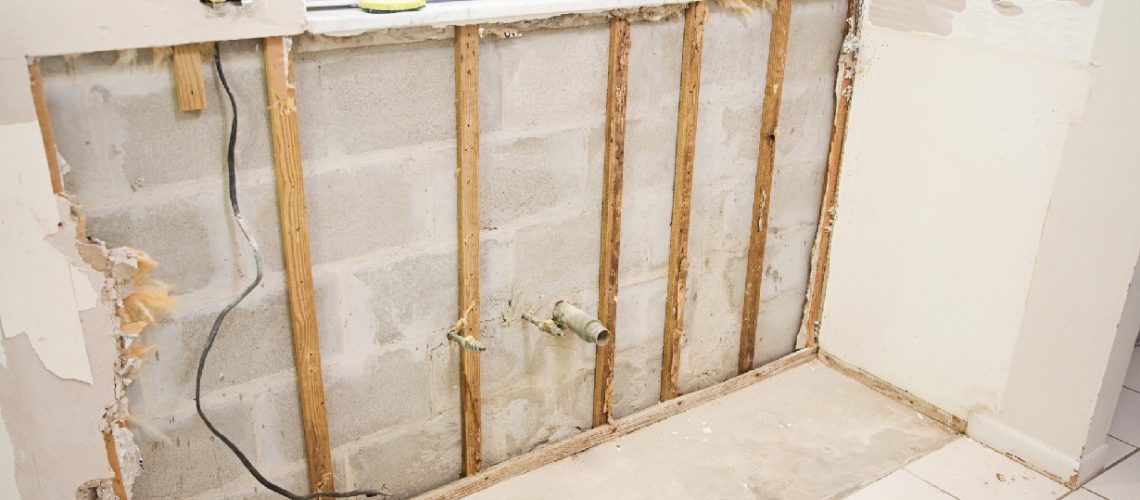
Water-damaged drywall is one of the more common problems homeowners experience. Drywall is everywhere in the house, and it doesn’t handle water well. It has a paper wrapping around a core of gypsum, so it quickly absorbs moisture, loses its integrity when wet, and is a breeding ground for mold.
Your best bet in preventing water damage is to catch it early. This can be easy when you have a storm or burst pipe, but much harder when you have slow leaks behind the wall. Here’s what to look for when identifying drywall water damage, what causes it, and how to prevent it from happening again.
Identifying Drywall Water Damage
Many homeowners believe that if they have water damage, they will see standing water in their home. Unfortunately, water damage can be subtle, so you’ll want to look for these signs:
- Yellow, brown, or ring-shaped stains
- Peeling, blistering, or bubbling paint
- Soft, spongy areas that give a bit when pressed
- Sags or bulges, especially in ceilings under bathrooms, attics, and air conditioning units
- Joints and corners that are cracked or crumbling
- Persistent musty smells
- Visible mold, usually dark spots along baseboards, ceilings, or near windows
If you’re not sure if what you’re seeing is drywall water damage, check your suspicions with an inexpensive moisture meter. Professionals commonly use these, and they may also use thermal imaging to reveal any hidden moisture behind walls before it’s too late.
Most Common Culprits of Drywall Water Damage in Valley Homes
Here are some of the more common causes of drywall water damage in Rio Grande Valley homes:
- Leaky plumbing within walls
- Dripping under sinks
- Leaking water storage tank heaters
- Dripping ceiling of a leaking roof
- Leaks around windows and outside doors Verify the seal
- Tropical storm flooding
- Blocked air conditioning units
Can You Save Water-Damaged Drywall?
That depends. If the water is clean (like a supply line leak) and the drywall was dried quickly, then it can often be salvaged if it maintains its shape and still feels solid. In those cases, you may just need to dry it out and do a little cosmetic repair.
In general, drywall will need to be replaced if:
- It’s soft, crumbling, sagging, or swollen out of shape
- It stays wet for more than a day or two
- There’s mold growth
- The water source was sewage flooding or an overflowing toilet
If you’re not sure, it’s best to be safe and replace the water-damaged areas rather than hide an issue that could lead to mold or compromised walls.
How Water-Damaged Drywall is Repaired
Step 1. Shut off the water supply. Stop the source of the water (i.e., turn off the supply, repair the leak, or relieve the clog). You won’t have a permanent fix until you resolve the underlying problem.
Step 2. Remove standing water and dry the area. Water extraction is the process of removing water quickly and drying the wall cavity, insulation, and framing with air movers and dehumidifiers.
Step 3. Locate concealed moisture and mold. The only way to know that materials are “bone dry” is to obtain a moisture reading. You must remove the mold before you can begin rebuilding.
Step 4. Remove damaged drywall. Cut out the damaged areas of drywall, usually in a straight line. Framing and insulation are also checked and dried if they are wet.
Step 5. Rebuilding and finishing. The new drywall is taped, mudded, and sanded. You can use a stain-blocking primer so that any old water stains won’t bleed over when you paint the wall.
If you have small, surface stains on solid, dry drywall, you will probably be able to manage them yourself. Anything bigger, wet underneath, or tied to mold will require a professional.
How to Prevent Water Damage to Drywall
Most water damage can be avoided with simple habits.
Have a working AC unit. In the RGV, we use our AC all the time. Service yours regularly and keep the condensate drain line clear. Periodic clearing of the line can keep algae and debris from building up.
Check plumbing. Take a few minutes to inspect around toilets, sinks, your water heater, and your washing machine for drips, worn hoses, or corrosion. Change worn supply lines.
Maintain your roof and exterior. Inspect your roof following a major storm. Also clean out gutters to direct water away from your home and reseal windows and doors as the caulk starts to crack.
Manage indoor humidity. Run bathroom exhaust fans for 15-30 minutes after showering, and get a dehumidifier if rooms are damp.
Act on little signs immediately. Things like faint stains or bubbling paint are great things to take action on, as they’re cheaper and easier to fix than a soaked wall or ceiling.
Get Help With Drywall Water Damage
Drywall water damage is best handled by early detection, thorough drying, and proper repair. Simply painting over a stain will only lead to problems down the road, ranging from mold growth to structural damage, so it’s vital to identify the source of the stain, dry out the wall cavity, and repair the root cause.
Texas Elite Restoration helps homeowners throughout the entire Rio Grande Valley, including Harlingen, with all aspects of water damage recovery, from 24/7 water extraction and structural drying to mold remediation and remodeling services to get your walls just right.
Contact Texas Elite Restoration to schedule an inspection or dial our 24/7 emergency line at (956)-245-4852.